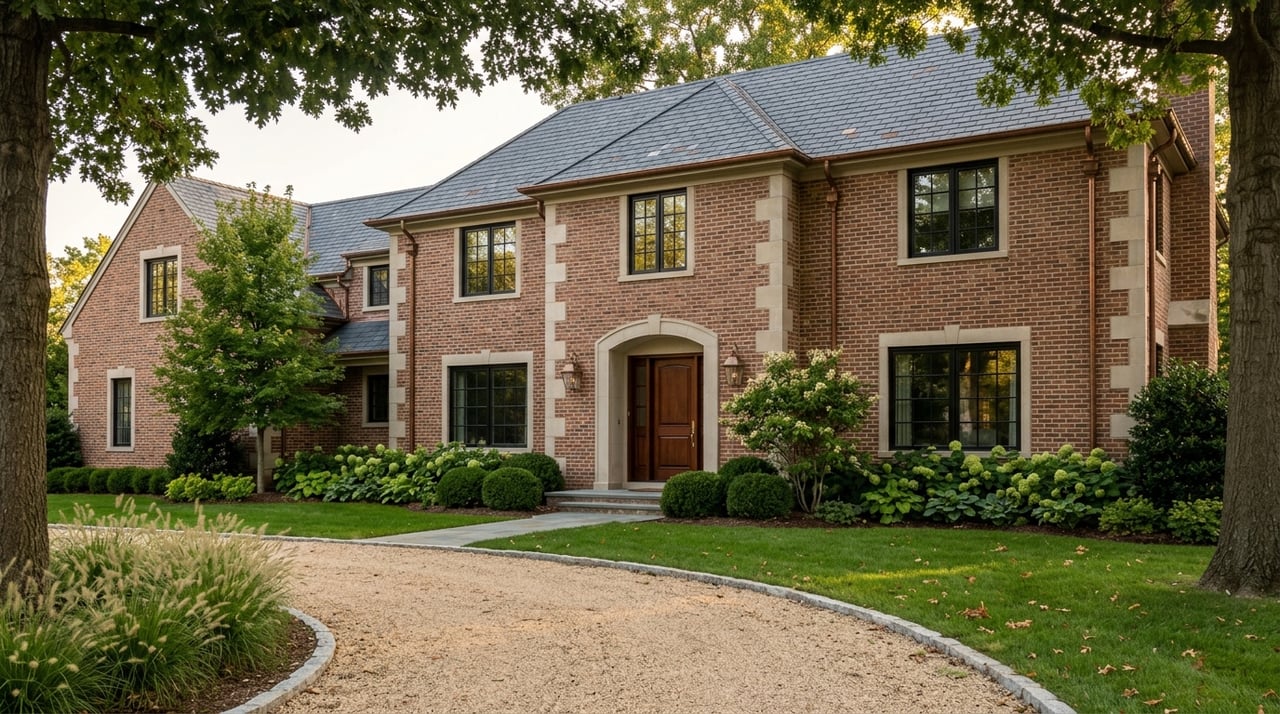
What makes Indian Hill feel so different from most luxury markets around Greater Cincinnati? It is not just the price point. It is the combination of large land parcels, deep privacy, limited housing turnover, and a setting shaped by open space and long-standing estate patterns. If you are thinking about buying or selling here, understanding those factors can help you make smarter decisions. Let’s dive in.
Indian Hill Starts With the Land
In Indian Hill, the land often drives value as much as the house itself. The Village of Indian Hill covers about 18.67 square miles and had 6,090 residents in 2024, with a 96.7% owner-occupied housing rate, a median household income of $234,821, and a median owner-occupied home value of $1,192,800, according to U.S. Census QuickFacts.
That profile points to an estate-oriented market, not a typical suburban one. Buyers are often looking for space, privacy, and a lasting setting. Sellers benefit when they understand that buyers here may be evaluating the full property experience, not just finishes and square footage.
The village also puts a clear emphasis on open space. According to the Village of Indian Hill about page, greenery runs around and through the community, and the village maintains parks, recreational facilities, and bridle trails. That trail network totals 75 miles, which is one of the area’s defining features.
Zoning Shapes Scarcity
A big reason Indian Hill feels exclusive is that the zoning is designed to keep residential lots large. Under the village zoning code, District A requires 5-acre lots for dwellings, District B allows 3-acre lots, and District C allows 1-acre lots. The code also sets frontage, yard, and lot coverage standards, with principal structures capped at 40 feet in height.
Those rules matter because they help preserve spacing, privacy, and a lower-density feel. In practical terms, that means lot size, frontage, setbacks, and mature tree cover can have an outsized effect on value. A beautifully updated home is important, but a rare site is often harder to duplicate.
The local review process adds another layer. The Planning & Zoning department oversees subdivisions, variances, and special exceptions, which helps screen land-use changes before they shape the market.
Why Prices Can Vary So Much
One of the most important things to know about Indian Hill is that the luxury market does not move in neat, uniform steps. Pricing can vary widely based on the property’s setting, architecture, privacy, and condition.
The broader 45243 listing feed shows just how broad the range can be, with examples spanning from lower-priced condos to estate properties listed at $1.5 million, $1.995 million, $3.5 million, $3.95 million, and $4.911 million, based on the 45243 market feed. That spread shows why simple price-per-square-foot thinking can miss the real story.
In Indian Hill, two homes with similar interior size may command very different values if one offers better acreage, a more private approach, stronger architectural character, or a more complete connection between the house and the site. Buyers should compare properties carefully. Sellers should position their home around the features that truly set it apart.
Architecture Carries Real Premiums
Indian Hill is not just a land market. It is also a place where architecture and historical character can add meaningful value.
The Indian Hill Historical Society notes that the village has nearly 100 Landmark Plaques and documents a wide range of historic forms, including Italianate, late-Georgian, and Greek Revival homes. That kind of architectural depth helps explain why some properties appeal to buyers for reasons that go well beyond updated kitchens or new baths.
The village’s own history also shapes the market. According to the village about page, some main thoroughfares follow early Indian trails, and the area’s past includes a long tradition of country living. For today’s buyers, that can translate into a premium for properties that offer a sense of continuity, heritage, and place.
This does not mean only historic homes matter. Contemporary and renovated homes can also perform very well. What matters is whether the architecture fits the setting and whether the property delivers a cohesive experience from arrival to interior layout to outdoor spaces.
Indian Hill Is a Low-Volume Market
Luxury buyers and sellers in Indian Hill should expect a market that behaves differently from nearby communities. According to Redfin’s Indian Hill housing market snapshot, the median sale price was $1.725 million in February 2026, with a median 41 days on market, based on just 3 sales.
That small sample size matters. In a low-volume market, one standout sale can pull the median sharply up or down. This is why monthly data in Indian Hill is best viewed as directional rather than absolute.
Nearby markets are significantly less expensive and often move differently:
- Indian Hill: $1.725M median sale price, 41 days on market
- Mariemont: $904.5K, 27 days on market
- Terrace Park: $736K, 34 days on market
- Montgomery: $590K, 87 days on market
- 45208: $539.9K, 57 days on market
- 45209: $470K, 63 days on market
For buyers, this means patience and precision matter. For sellers, it means pricing strategy has to reflect the true buyer pool, not just a broad regional average.
The Buyer Pool Is Often Local First
Indian Hill does attract some relocation interest, but much of the buyer demand appears to be local or regional. Redfin migration data for Oct-Dec 2025 shows that 70% of Indian Hill homebuyers searched to stay within the metro area, while Dayton, New York, and Columbus were the largest inbound metros, according to the same Indian Hill market page.
That suggests a buyer mix that includes local move-up households and some out-of-market relocators. If you are selling, your marketing should speak to both groups. Local buyers may already understand the value of the setting, while relocating buyers may need more context around land, layout, and lifestyle features.
If you are buying from outside the area, this is where local guidance becomes especially valuable. A home here is not simply a home in a higher price band. It is often a land-and-setting purchase first.
What Sellers Need to Get Right
In a market like Indian Hill, presentation is part of the price story. Buyers expect a polished first impression, especially online.
The National Association of Realtors 2025 Profile of Home Staging found that 83% of buyers’ agents said staging made it easier for a buyer to visualize the property as a future home. NAR also found that among buyers using the internet, 83% said photos were very useful, 57% said floor plans were very useful, and 41% said virtual tours were very useful.
For Indian Hill listings, that supports a premium presentation approach. Sellers should expect strong photography, clear floor plans, video, and thoughtful staging to be part of the baseline strategy rather than optional extras.
Just as important, your marketing should explain the land. In many Indian Hill properties, some of the strongest value drivers include:
- Acreage
- Frontage
- Privacy
- Tree cover
- Relationship between the house and site
- Renovation history
- Outbuildings
- Access to trails or open space
These details help buyers understand why a property commands its price. In a luxury market with fewer transactions, clarity can be a major advantage.
What Buyers Should Watch Closely
If you are buying in Indian Hill, it helps to look beyond surface-level finishes. A beautiful interior can be updated over time, but certain site characteristics are much harder to change.
Pay close attention to the property’s lot size, approach, setback feel, and how the home sits on the land. Consider whether the architecture matches the setting and whether outdoor spaces feel private and functional. Also look at how much of the property’s value is tied to features that are difficult to recreate elsewhere.
This is also a market where comparing only active listings may not tell the full story. Because inventory can be limited and sales volume can be low, context matters. A disciplined, local review of property positioning can help you avoid overpaying for cosmetic appeal while missing the deeper value drivers.
How the Market Really Works
So how does the Indian Hill luxury market really work? It works through scarcity, land, privacy, architecture, and low turnover. It is shaped as much by zoning and setting as by interior design.
That is why successful buying and selling here usually requires a more tailored approach than in a typical suburban market. You are not just evaluating a house. You are evaluating a total property experience in one of Greater Cincinnati’s most distinct residential settings.
Whether you are preparing to buy, sell, or relocate, the goal is the same: understand what creates value before you make a move. If you want a clear, methodical plan for navigating higher-end homes in Greater Cincinnati, connect with Andrea Neswadi for trusted guidance and polished, tech-forward support.
FAQs
What makes the Indian Hill luxury market different from other Cincinnati-area markets?
- Indian Hill stands out for its large residential lots, low-density zoning, high owner-occupancy, open space, and relatively low transaction volume compared with nearby markets.
How important is lot size in the Indian Hill real estate market?
- Lot size is a major value driver because Indian Hill zoning requires large residential parcels in many districts, which supports privacy, spacing, and long-term scarcity.
How should sellers market a luxury home in Indian Hill?
- Sellers should use professional photography, floor plans, video, staging, and clear property details that explain acreage, privacy, site layout, and other land-related features.
How reliable are monthly price trends in the Indian Hill housing market?
- Monthly data can be useful directionally, but because sales volume is low, a small number of transactions can significantly affect the median sale price or days on market.
Who typically buys homes in Indian Hill?
- Based on Redfin migration data, many buyers appear to come from within the local metro area, along with a smaller share of regional and out-of-market relocators.
What should buyers focus on when comparing Indian Hill homes?
- Buyers should look closely at acreage, frontage, privacy, tree cover, architectural fit, and the overall relationship between the home and its setting, not just interior updates.